Private School Where Kids Actually Lead Their Own Learning
Somewhere between the third "my child is bored" conversation and the fourth Google search for alternatives, a specific question starts forming: is there a private school where kids genuinely have a say in their own education. Not as a slogan, but as a daily, structural reality? The answer exists. And it looks nothing like what most parents expect.
What "Kids Have a Say" Actually Means in Practice
Before we talk about any specific school, it's worth being honest about what this phrase usually means. And what it has to mean to be real.
In most schools, "student voice" means a student council that plans spirit week. That is not what we are talking about. In a genuinely student-led environment, students have documented, structural agency over four things: how they master a skill, what goals they are working toward, the pace at which they move, and the norms that govern their community. These are not soft extras. They are the architecture of the school day.
"When a child owns their goals, they stop waiting to be taught and start choosing to learn. And that shift changes everything about how they show up."
At Wonderstorm Academy, a private K–12 micro-school in Laguna Hills serving families across South Orange County, this is not a philosophy statement on a wall. It is a written, observable daily practice. Students set personal goals. They track their own progress. They work within a community contract they helped create. And they move through material at a pace that reflects their actual readiness, not the average pace of a classroom of thirty.
Parents from Mission Viejo, Aliso Viejo, and Laguna Niguel who visit the campus for the first time often say the same thing: the students look purposeful. Not managed.
The Four Pillars of Real Student Agency
For a school to legitimately claim that kids have a say, four structural elements need to be in place. Here is what to look for. And how Wonderstorm Academy's model addresses each one.
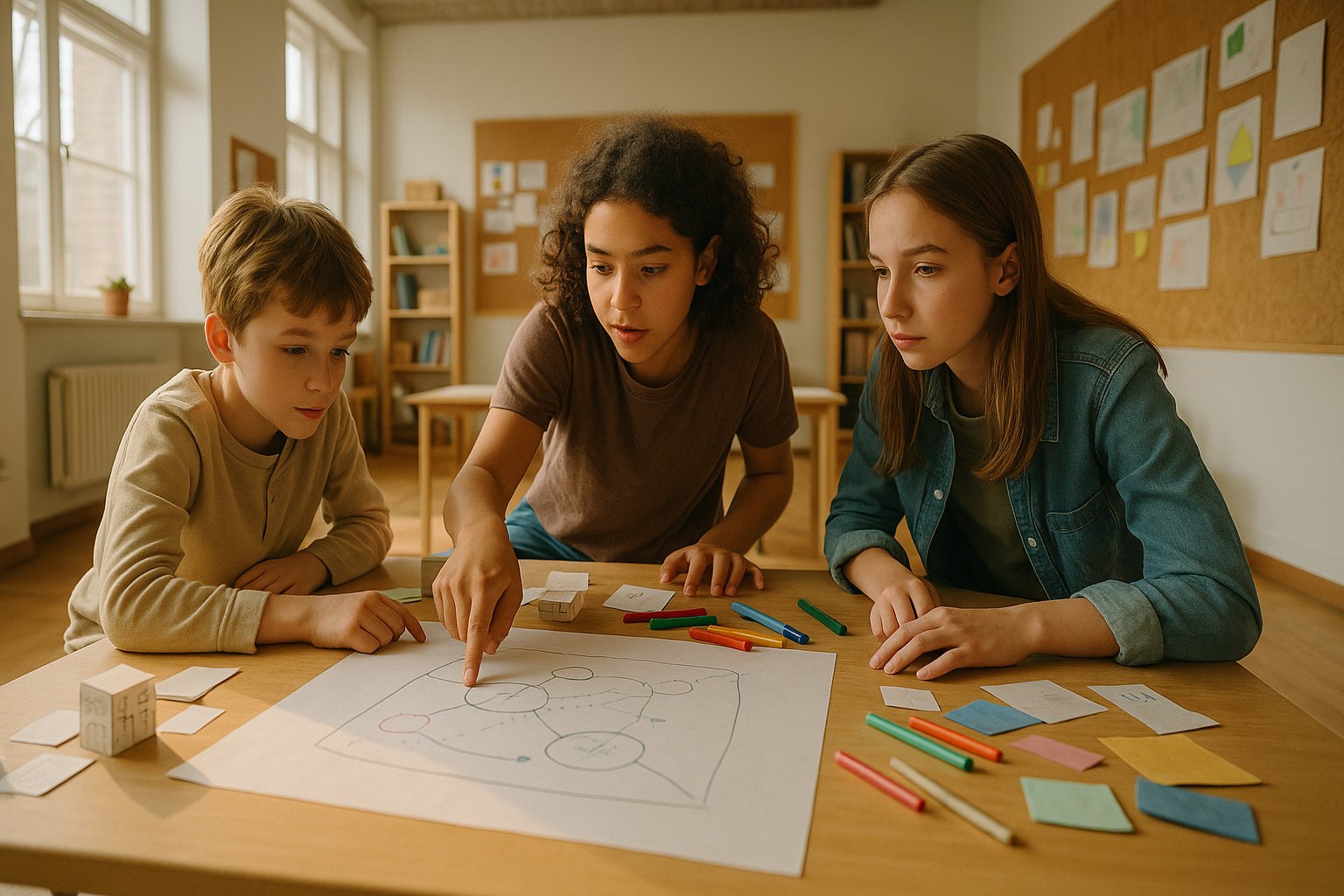
Voice in daily work. Students are not handed a single path through a concept. They choose from a range of projects, resources, and challenges that let them demonstrate mastery in ways that match how they actually think and create. A student who processes ideas visually can build and present. A student who thinks in systems can design and test. The destination is the same. The route belongs to the student.
Voice in goals. At Wonderstorm, students set academic, character, and project goals in regular goal-setting sessions. These are not completed and filed away. They are living documents, revisited and updated, tied to real project work and community exhibitions where students present their progress to peers, parents, and sometimes outside mentors.
Voice in pace. The mixed-age learning space model means a student is not locked into the timeline of their birth year. A nine-year-old who is ready to move fast in mathematics moves fast. The same child who needs more time developing a communication skill gets that time. Without shame, without being held back as a cohort label.
Voice in community norms. Students at Wonderstorm co-create the agreements that govern how their learning space operates. This is not performative. When a student has had a hand in writing the rules, they understand why the rules exist. Conflict resolution becomes a practiced skill, not a trip to the principal's office.
The Three Lenses That Make Agency Rigorous, Not Soft
One of the most common fears parents bring to a school like Wonderstorm is this: if kids have so much freedom, are they actually learning anything? It is a fair question, and it deserves a direct answer.
Wonderstorm Academy organizes every student's experience around three core lenses: Leadership, Entrepreneurship, and Powerful Communication. These are not electives. They are the framework through which core academics are taught, practiced, and assessed. Math lives inside a real project. Writing lives inside a real pitch. Science lives inside a real experiment with real stakes.
"Entrepreneurship isn't a bonus skill at Wonderstorm. It is the classroom where math, communication, and resilience are all learned at once."
This is what separates genuine student-led education from unstructured free play. Agency without rigor produces neither confidence nor competence. Wonderstorm's model is designed so that students have genuine choice within a framework that demands real mastery. The goal is not a child who feels good about learning. The goal is a child who can lead a team, communicate an idea under pressure, and build something that works.
Families from Rancho Santa Margarita, Lake Forest, and Coto de Caza who have made the shift to Wonderstorm consistently describe the same early observation: within weeks, their child starts talking about school differently. Not about what happened to them. About what they built, decided, or figured out.
Why Traditional Schools Struggle to Offer This
It would be unfair to say traditional schools do not care about student agency. Many teachers do, deeply. The problem is structural. When one teacher is responsible for twenty-five to thirty students of the same age, moving through the same curriculum at the same pace to hit the same standardized benchmarks, genuine individual agency becomes almost impossible to sustain. Not because of bad intentions, but because the architecture does not support it.
A school cannot give children sovereignty over their learning while simultaneously optimizing for standardized outcomes. These two goals are structurally incompatible.
Micro-schools like Wonderstorm are built differently at the foundation. Small cohorts, mixed ages, mentors rather than lecturers, project-based work rather than textbook coverage. These structural choices are what make real student agency possible. Not just as a value, but as a daily operational reality.
For parents in Dana Point, San Clemente, San Juan Capistrano, and Laguna Beach who have felt the gap between what traditional schooling promises and what it delivers, this distinction matters enormously. The question is not whether a school values student voice. The question is whether the school's structure makes it possible.
What a Student-Led Day Actually Looks Like
Abstract arguments about agency are easy to make. What parents actually want to know is: what does Tuesday look like?
At Wonderstorm Academy's Laguna Hills campus, a typical day is organized around learning space time, skill building blocks, and project work. Students arrive with their goals visible and their current project in progress. There is movement, collaboration, and real debate. Mentors circulate, ask questions, and challenge thinking. But they do not lecture at the front of a room.
Students who are working toward a project milestone might be designing a prototype, preparing a presentation, or working through a specific academic skill they need to move forward. The work is self-directed, but it is not aimless. Progress is tracked, goals are reviewed, and exhibitions of learning happen regularly. Moments when students present real work to real audiences, including parents, community members, and sometimes local entrepreneurs.
Life Skills Labs add another dimension: students across the K–12 age range (ages 5 through 18 at Wonderstorm) engage with hands-on, real-world challenges that build practical competence alongside academic knowledge. This is not career day. It is a sustained, integrated part of how the school operates.
Families from Newport Coast, Trabuco Canyon, Las Flores, Portola Hills, and Ladera Ranch making the drive to Laguna Hills are not choosing a longer commute for a marginal improvement. They are choosing a fundamentally different model of what school can be.
How to Know If Your Child Is Ready for This
Not every child arrives at a student-led school ready to thrive immediately. Some children, particularly those who have spent years in highly directed environments, need a transition period. They have been trained to wait for instructions. Unlearning that takes time.
Wonderstorm's enrollment process is designed with this in mind. The journey begins with a conversation. A call with the school's team to understand your child's specific situation, learning style, and what has and has not worked before. This is followed by a campus tour where prospective families can see the model in action, not just hear about it. Enrollment is not a transaction. It is a values alignment.
The families who thrive at Wonderstorm tend to share a few common traits: they believe childhood is a launchpad, not a waiting room. They want their child to be known as an individual, not managed as a number. And they are ready to be part of a community that takes education seriously as a shared commitment, not a service they purchase and hand off.
FAQ: What Families in South Orange County Ask Most
Will my child still be prepared for college if they attend a student-led school? Yes. Wonderstorm Academy covers rigorous core academics alongside its leadership, entrepreneurship, and communication framework. The student-led model does not replace academic mastery. It delivers it through a different, more engaging structure. Students build portfolios of real work, develop strong communication skills, and graduate with the self-direction and critical thinking that selective colleges and universities increasingly value.
How small is the community, and will my child have enough peers? Wonderstorm is intentionally small. That is a feature, not a limitation. Small cohorts mean every child is genuinely known by their mentors and peers. The mixed-age learning space model also means students interact with a range of ages, which builds social maturity, empathy, and leadership skills that same-age-only environments rarely develop as deeply.
Is Wonderstorm affiliated with any recognized educational network? Yes. Wonderstorm Academy is part of the Apogee Strong network, a nationally recognized framework for student-led micro-schools. This gives families access to a proven, values-aligned educational model with a documented track record. Not a homegrown experiment.
What if my child struggles with self-direction at first? This is one of the most common questions, and it is the right one to ask. Students who have been in highly directed environments often need time to develop the muscle of self-direction. Wonderstorm's mentors are experienced in supporting this transition. The structure of goal-setting, community agreements, and regular check-ins provides scaffolding while genuine agency is gradually built.
Where is Wonderstorm Academy located, and which communities does it serve? Wonderstorm Academy is located at 25332 McIntyre St, Laguna Hills, CA 92653. The school serves families from across South Orange County, including Mission Viejo, San Clemente, Dana Point, Aliso Viejo, Rancho Santa Margarita, Laguna Niguel, Lake Forest, San Juan Capistrano, Laguna Beach, Newport Coast, Coto de Caza, Las Flores, Trabuco Canyon, Ladera Ranch, and Portola Hills.
The Only Question That Matters
There is a version of school where your child spends 15,000 hours being told what to do, when to do it, and how to feel about the results. And there is a version where those same hours are spent building, leading, communicating, and discovering who they actually are.
Wonderstorm Academy exists because a growing community of families in South Orange County decided the second version was not optional. It was the point.
If you have been searching for a private school where your child has genuine agency, where leadership and entrepreneurship are the curriculum and not the extracurricular, and where your family's values are reflected in the community you join every day, this is worth a conversation.
Book a call to see if Wonderstorm Academy is the right fit for your family.
Research sources8
Live web research informed this article. These are the sources it drew on.
- Soluções Inteligentes de Marketing Orgânico & E-commercewonderstores.pt2025-01-01
- Răspunsuri rapidewonderstore.ro2023-10-17
- Wondershare Help Centersupport.wondershare.com
- Autodesk Flow Studio Help & Documentationhelp.wonderdynamics.com2025-07-31
- Log into Facebookfacebook.com
- Securitate si confidentialitatewonderstore.ro2023-10-17
- Download and Install Help for ...support.wondershare.com
- Wonderstores is rated "Great" with 4 / 5 on Trustpilottrustpilot.com2025-07-01