The 12-Year-Old Who Pitched Investors and Won
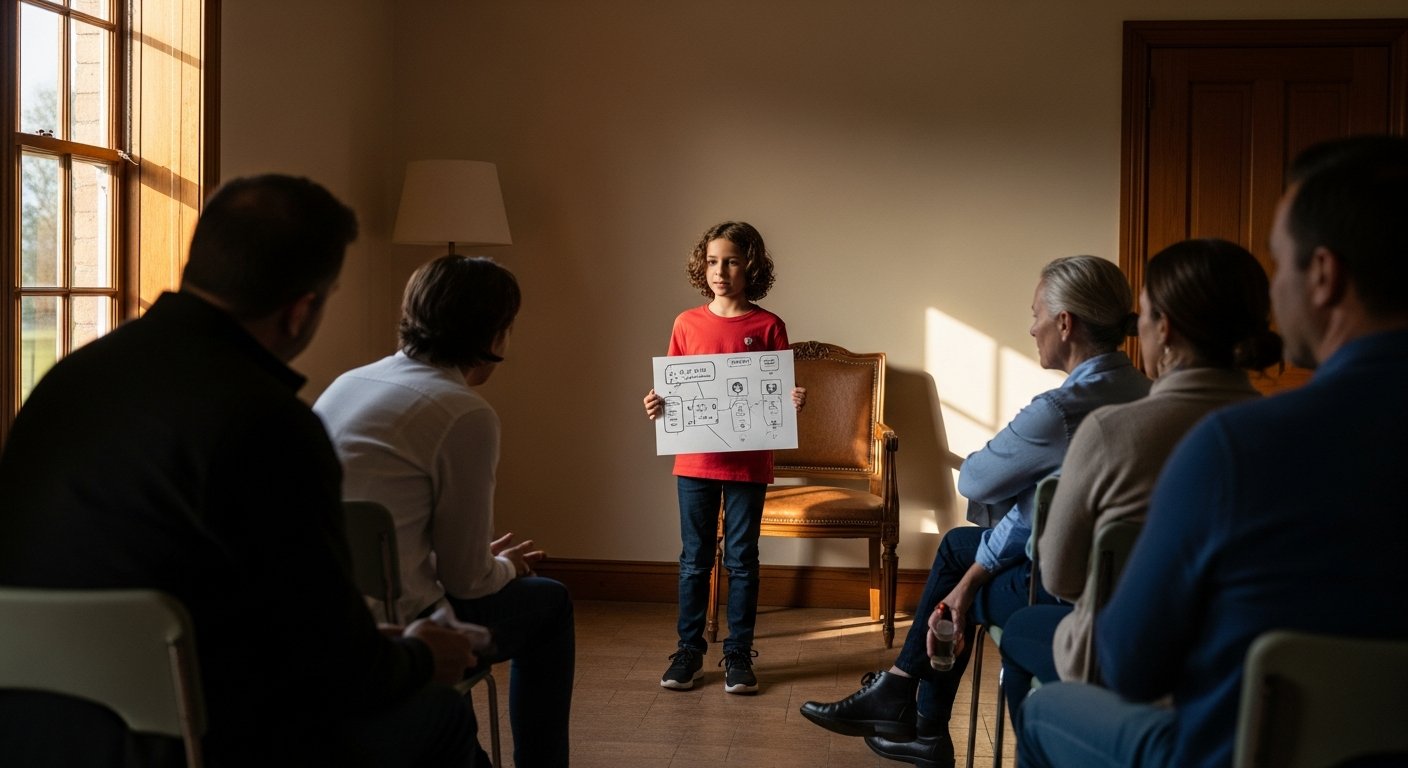
Somewhere in Laguna Hills, a seventh-grader stood in front of a room of adults and pitched a business idea from scratch. She had built the product, set the price, researched her market, and prepared for objections. The adults in the room were not pretending. Neither was she.
What Traditional Schooling Gets Wrong About Readiness
Here is the honest number: the average K–12 student spends roughly 15,000 hours in school before graduation. That is more time than most people log in their first decade of professional work. And yet the most common complaint from employers, college admissions officers, and parents alike is that graduates arrive without the one thing all that time was supposed to produce. Readiness.
Not readiness for a specific job. Readiness for the actual texture of adult life: making decisions under uncertainty, communicating ideas to skeptical audiences, building something from nothing, and recovering when it does not work the first time.
The conventional private K-12 school model, however well-resourced, was not designed to teach those things. It was designed to sort students by performance on standardized measures and deliver them to the next stage of a credentialing pipeline. That pipeline made sense for an industrial economy. It makes considerably less sense now.
The most common complaint from employers and parents alike is that graduates arrive without the one thing all that time was supposed to produce. Readiness.
The Case for Entrepreneurship Education for Kids, Starting Young
The instinct to delay entrepreneurship education for kids until high school. Or worse, to treat it as an elective enrichment program. Rests on a faulty assumption: that young children cannot handle real stakes, real failure, or real responsibility. Every parent who has watched a six-year-old negotiate with ruthless precision knows this assumption is wrong.
Children are natural entrepreneurs. They are relentlessly curious, unafraid of iteration, and unburdened by the learned helplessness that years of passive schooling can install. The question is not whether a child is ready for entrepreneurial thinking. The question is whether the school is ready to meet them there.
At Wonderstorm Academy, a private K–12 micro-school in Laguna Hills operating within the Apogee Strong network, entrepreneurship is not a class. It is a lens applied to everything. From the earliest years through graduation. The three interlocking frameworks that organize all learning at Wonderstorm are Leadership, Entrepreneurship, and Powerful Communication. These are not soft-skills electives bolted onto a traditional curriculum. They are the architecture of the entire educational experience.
A Day That Looks Nothing Like School
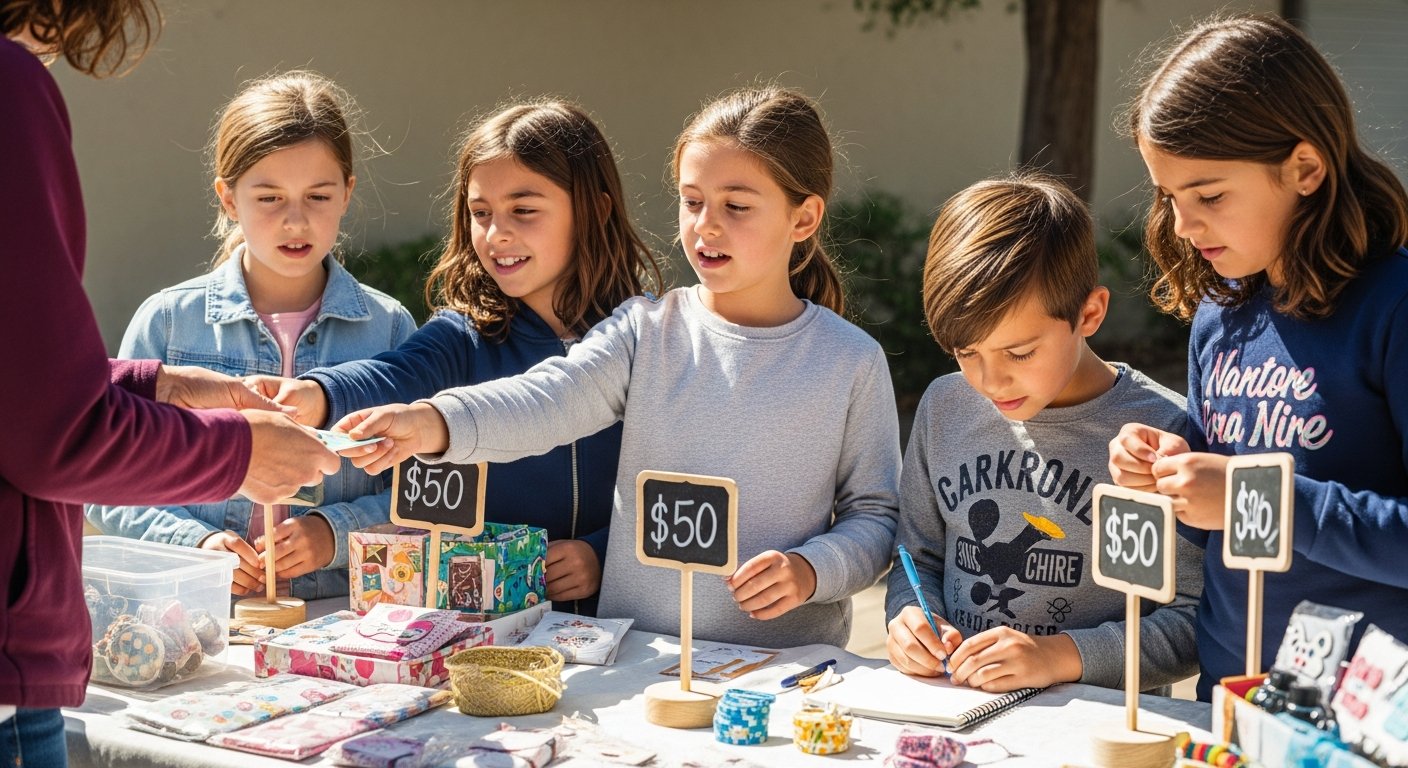
Walk onto the Wonderstorm campus on any given morning and you will not find rows of desks facing a whiteboard. You will find learners in motion. A small group of students might be deep in a design sprint for a product they plan to sell at the next Kid's Market. A real, community-facing marketplace where students build, price, pitch, and operate actual businesses in front of a live audience. Another cohort might be in a Socratic discussion, students holding the floor, defending positions, pushing back on each other's reasoning with the kind of intellectual friction that builds genuine communication skill.
This is what alternative K-12 education in Laguna Hills looks like when it is built from the ground up around a different set of outcomes. The goal is not a transcript. The goal is a portfolio of real experiences. Things the student actually built, decisions they actually made, problems they actually solved. That compounds in value across the entire K–12 journey.
The school's Life Skills Labs go further still, embedding practical competency development into the academic week. Real-world apprenticeships place students in community-facing contexts where the stakes are genuine and the feedback is unfiltered. These are not simulations. They are the thing itself.
Why the Micro-School Model Makes This Possible
The structural fact that enables everything described above is size. Wonderstorm is, by design, a micro-school. A small, intentional learning community where every child is genuinely known. Not known in the way a teacher with thirty students attempts to know each one. Known in the way that produces the kind of trust and challenge that actually changes a person.
Every child here is genuinely known. Not known the way a teacher with thirty students attempts to know each one, but known in the way that produces the kind of trust and challenge that actually changes a person.
This matters for entrepreneurship education specifically because real entrepreneurial development requires honest feedback, personalized mentorship, and the freedom to fail in a supported environment. None of those things scale well. A large institution can offer entrepreneurship as a program. A micro-school can offer it as a culture.
For families exploring school choice ESA California options or simply searching for a credible alternative to the public and conventional private school systems in Orange County, the micro-school model represents something structurally different. Not just philosophically different. The Apogee Strong network, of which Wonderstorm is a part, provides the rigorous framework and national track record that answers the natural question: is this a proven model, or someone's well-intentioned experiment? It is the former. The learner-driven approach has been validated across multiple campuses and years of documented outcomes.
What the 12-Year-Old Pitch Actually Proved
Back to the student who pitched investors. Her story is not exceptional within the Wonderstorm community. It is representative. What made it possible was not unusual talent, though she has plenty of that. What made it possible was an educational environment that had been, since she was small, treating her as someone capable of real responsibility.
She had been practicing Leadership since she could read. She had been practicing Powerful Communication in Socratic discussions and project presentations for years before she stood in front of that room. She had been practicing Entrepreneurship through Kid's Market events, design sprints, and real product iterations that taught her what works and what does not in front of actual customers.
By the time she faced a room of investors, she was not performing confidence. She had built it, incrementally, through thousands of hours of real practice in a school that believed the work of childhood is not preparation for life. It is life.
This is the promise of entrepreneurship education for kids done right: not a precocious performance, but a compounding of genuine capability across an entire formative decade. Parents who enroll at age four and stay through graduation are not buying a different curriculum. They are choosing a different trajectory.
The Orange County Alternative That Has Always Been Here
For families in South OC who have been searching. Through the noise of online-only platforms, franchise micro-school networks, and conventional private K-12 school options. Wonderstorm Academy sits at a specific, defensible intersection. It is a learning center in the truest sense: a place where learning is the active, daily work of every student, not a passive reception of information delivered by an adult at the front of a room.
It is local. It is physical. It is embedded in the community. And it is built on a nationally validated framework that has been producing self-directed, entrepreneurially capable graduates long enough to point to real outcomes.
The enrollment process reflects the same philosophy as the school itself: deliberate, consultative, and designed to ensure genuine fit. Book a call. Take a campus tour. Ask every question you have. The families who thrive at Wonderstorm are the ones who walk in already knowing something is wrong with the default and are ready to see what the alternative actually looks like in practice.
If your child is the kind of person who has always seemed too big for the container school provides. Too curious, too entrepreneurial, too ready to lead. Wonderstorm Academy in Laguna Hills may be exactly the learning center they have been waiting for.
Book your campus tour at Wonderstorm Academy today. See Leadership, Entrepreneurship, and Powerful Communication in action. Not on a brochure, but in a room full of kids who are already building their futures.
David Yarbrough
Co-Founder
Dave Yarbrough is the founder of Wonderstorm Academy, a devoted husband and father of six, and a lifelong student of human potential. For more than 25 years, he has explored how education can help children flourish intellectually, socially, and personally. His vision is to create a new model of learning that expands what is possible for children and for education as a whole. Dave holds a Bachelor of Arts in Philosophy from UC Santa Barbara.
More from David Yarbrough →