What Is a Micro-School, and Is It Right for Your Child?
Something is off. Your child is technically keeping up, decent grades, no red flags, but every afternoon they come home a little less curious than they left. If you have started Googling alternatives and landed on the word "micro-school," this article will give you the clearest, most honest answer available: what the model actually is, how to tell whether it fits your child, and what one specific campus in Laguna Hills is doing that no other school in South Orange County replicates.
What a Micro-School Actually Is
A micro-school is a small, tuition-based private school, typically serving around 15 students per group, designed to be more personal and more flexible than a conventional classroom. The defining features are not a brand name or a franchise kit. They are structural: small groups, mixed-age learning, project-based instruction, close relationships between students and the adults guiding them, and a pace that bends to the child rather than demanding the child bend to the pace.
In California, the term "micro-school" carries no special legal status. Schools operating under this model generally file a Private School Affidavit with the state, which is the same mechanism governing other independent private schools. What varies enormously is the philosophy behind the walls. Some micro-schools function as structured private academies. Others operate more like homeschool cooperatives. The label alone tells you almost nothing. The philosophy and the daily practice tell you everything.
"The kids are treated as capable individuals and are encouraged to take ownership of their learning. Our child has grown so much in confidence, curiosity, and independence since joining.". Meera Kharbanda, Wonderstorm Academy parent
Why Families in South Orange County Are Looking
The search for something different is not a fringe movement. Private school enrollment in Orange County reached more than 50,000 students in 2023 to 2024, up over four percent from three years earlier. Families in Laguna Hills, Mission Viejo, Aliso Viejo, Rancho Santa Margarita, Lake Forest, San Juan Capistrano, Dana Point, San Clemente, Laguna Niguel, Laguna Beach, Newport Coast, Coto de Caza, Las Flores, Trabuco Canyon, Ladera Ranch, and Portola Hills are actively looking for options that do not exist inside the conventional model.
The pain they describe is consistent. Bright children who are bored. Curious kids who are learning to perform compliance rather than develop capability. Parents who are intentional about everything else in their lives and cannot reconcile that intentionality with handing their child's most formative years to a system built around standardized tests and passive memorization.
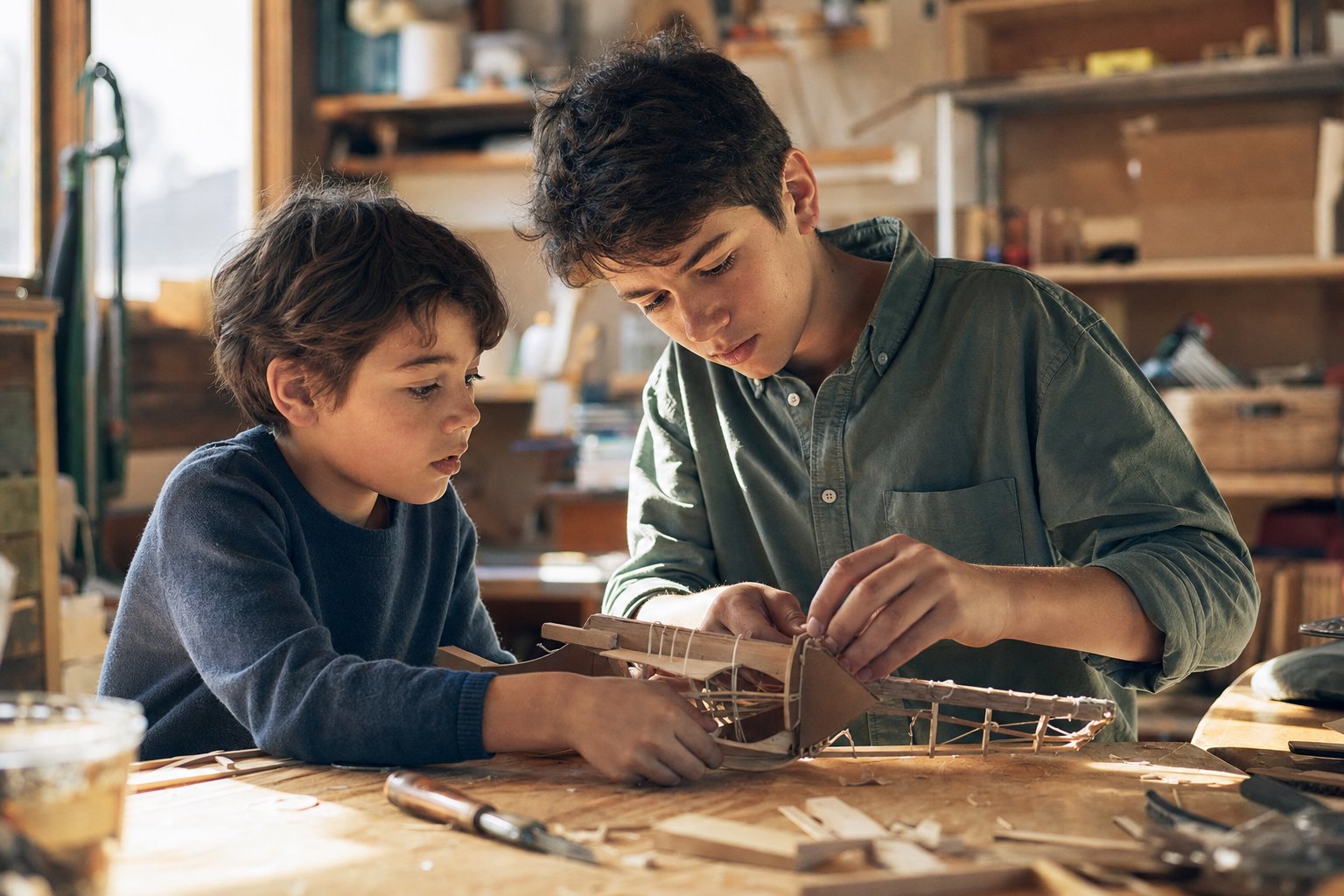
The research base on micro-schools is still young. RAND's 2025 work describes them as small and personalized but notes that large-scale, longitudinal data on academic outcomes across different contexts is limited. That means families should treat sweeping outcome claims carefully, from any school, and verify day-to-day fit rather than taking philosophy alone as evidence. What is clear is that for children who thrive with small-group attention, project-based work, mixed-age learning, and a high degree of self-direction, the model removes friction that conventional schools build in by design.
How to Know Whether It Fits Your Child
No model fits every child, and honesty here matters more than enthusiasm. A micro-school environment is likely a strong fit if your child does well with frequent feedback and close adult relationships, learns better by doing than by listening, handles flexible pacing and mixed-age groups without needing the external structure of a grade-level cohort, and has the self-direction, or the desire to develop it, to take real ownership of their work.
It is worth being equally honest about the cases where it is a harder fit. Families who want an extensive extracurricular menu, a large campus social scene, or a highly standardized academic path will find the micro-school model less suited to those priorities. The intimacy that makes the model powerful is also what makes it a different social experience than a school of several hundred.
The questions worth asking any micro-school before enrolling: Will my child be genuinely known, not just supervised? Are academics individualized, or is the curriculum the same for every child regardless of readiness? How is progress tracked and communicated? What does a typical Tuesday look like for a nine-year-old, and for a fifteen-year-old? The answers to those questions will tell you more than any brochure.
"She eventually moved two grade levels ahead. As meaningful as that was, it wasn't the biggest change we noticed.". Maja Pesevic, Wonderstorm Academy parent
What Wonderstorm Academy Actually Does
Wonderstorm Academy is a full-time, on-site private micro-school in Laguna Hills, California, at 25332 McIntyre St, serving children ages five through eighteen across a full K through 12 range. It draws families from across South Orange County, including Mission Viejo, San Clemente, Dana Point, Aliso Viejo, Rancho Santa Margarita, Laguna Niguel, Lake Forest, San Juan Capistrano, Laguna Beach, Newport Coast, Coto de Caza, Las Flores, Trabuco Canyon, Ladera Ranch, and Portola Hills.
The architecture of the curriculum is built on three core lenses: Leadership, Entrepreneurship, and Powerful Communication. These are not electives. They are not add-ons offered on Friday afternoons. They are the framework through which every academic subject, reading, writing, mathematics, science, and history, is taught. A student does not study history by reading a textbook summary. They step into the shoes of a pivotal historical figure, debate the decision that changed the century, and argue their position in front of peers who are arguing the other side. A student does not learn percentages on a worksheet. They price a product, track their own margins, and watch a bad number eat their profit.
Leadership, Entrepreneurship, and Powerful Communication are not what students study. They are how students learn everything else.
The Communication pillar runs from age five through graduation and grows in complexity at every stage. Students build public speaking, persuasion, social calibration, active listening, and the ability to walk into a room they have never been in and hold it. Not through instruction about social skills. Through live, in-field practice with real feedback from real audiences. The Entrepreneurship pillar means that by the time a Wonderstorm student reaches high school, they have built and operated real businesses, not simulated ones. They have priced a product, written copy that sells, managed cash flow, and stood in front of a live community audience at a Kid's Market event and pitched what they made.
For families who want a path to the University of California system, Wonderstorm offers a college path that allows a student to arrive at eighteen with an associate degree and all transfer coursework satisfied, applying through a transfer door where roughly one in four applicants is admitted rather than the freshman door where the acceptance rate is closer to nine percent. Same university. Same diploma. Roughly two and a half times the odds of getting in, and somewhere between seventy and ninety thousand dollars in tuition they never have to spend.
The question is not whether your child is capable. It is what their life is built around for the next thirteen years.
What Makes This Different From Every Other Alternative
The honest answer to why Laguna Hills has only a handful of private schools serving a small fraction of the school-age population in this region is not that families are satisfied. It is that most alternatives are either online programs that cannot replicate in-person community, franchise models that import a system without building local roots, or homeschool cooperatives that require the parent to carry most of the weight.
Wonderstorm is none of those. It is a physical campus, a daily in-person environment, a tight-knit community of families who share a philosophy about what childhood should look like and what education is actually for. The founders, Holly and Dave Yarbrough, have their own children enrolled. That is not a detail. That is the whole commitment made visible.
Parent Kathryn Badir described her family's experience this way: "Homeschooling has always sounded beautiful to us, but I also know my own strengths and limitations. Wonderstorm gave us the community and the structure we needed without asking us to become educators ourselves."
The model is not for every family. But for families in South Orange County who are intentional about what their children become, not just what they score, it is the only full-time, on-campus option built exclusively around that question.
Frequently Asked Questions
Will my child still be prepared for college if they attend a micro-school? Yes, and in some cases more strategically than through a conventional path. Wonderstorm Academy's college path allows students to complete an associate degree and all UC transfer requirements by age eighteen, then apply to the University of California as a transfer student, where admission rates run roughly two and a half times higher than freshman admission. Academic subjects including reading, writing, mathematics, science, and history are taught rigorously throughout the K through 12 program.
How small is the student population, and will my child have a real social life? The micro-school model is intentionally small, typically around fifteen students per group, which is a feature rather than a limitation. Mixed-age learning means students build relationships across age groups, practice real leadership with younger children, and develop social skills through daily in-person interaction rather than structured social events. Families consistently describe the community at Wonderstorm as unusually close and genuinely warm.
Is Wonderstorm a homeschool program or a hybrid model? Neither. Wonderstorm Academy is a full-time, on-site private school operating at a physical campus in Laguna Hills. Students attend in person every day. It is not a homeschool support program, a co-op, or an online alternative. Parents are not expected to deliver instruction at home.
What age can my child start, and how long can they stay? Wonderstorm accepts children beginning at age five, with a full K through 12 program running through high school graduation at eighteen. A family can enroll a kindergarten child and remain through graduation, building a single continuous educational relationship across thirteen years.
How do I find out whether Wonderstorm is the right fit for my family? The enrollment process begins with a direct conversation, not a form. Families book a call with the team, then schedule a campus visit to see the environment in person. The best evidence is what you observe when you walk in: the engagement level of the students, the quality of the relationships between children and the adults guiding them, and whether the philosophy on the wall matches what is happening in the room.
The Decision That Determines Everything Else
There is a version of your child who graduates from a school like Wonderstorm: able to walk into any room, communicate with confidence, build things from nothing, and take ownership of the direction of their own life. And there is a version who has spent thirteen years learning to follow instructions, pass tests, and wait for someone to tell them what to do next. The difference is not potential. Every child who walks through the door of a school like this has potential. The difference is what their education was actually built around.
If you are a family in South Orange County who has been looking for an alternative and wanted to understand what the micro-school model really means before making the call, you now have the clearest picture available. The next step is to see it for yourself.
Schedule your campus tour at Wonderstorm Academy
Research sources6
Live web research informed this article. These are the sources it drew on.
- Microschools as an Emerging Education Model: Implications for Research and Evaluationrand.org
- What Do We Know About Microschools and Academic Achievement?rand.org2025-03-20
- A Detailed Guide to Education in Los Angelestheschoolhouse.org2025-10-22
- July 29, 1999californiapolicycenter.org
- Copyright © ISRG Publishers. All rights Reserved.isrgpublishers.com
- Wonderstorm Academy | South Orange County, CAapogeecalifornia.com2026-06-23