Is a Private Micro-School Worth the Tuition?
You have done the math. You have looked at the tuition number, looked at your public school's rating, and asked the question every intentional parent in South Orange County eventually asks: is this actually worth it? The honest answer is that it depends entirely on what you are paying for. And most parents are not yet asking the right question.
The Tuition Question Most Parents Ask First
The default comparison is straightforward. Public school costs nothing in direct tuition. A traditional private school in South Orange County runs anywhere from mid-range to well over twenty thousand dollars per year. A private micro-school sits in a similar or higher band. So the question becomes: what does the extra money buy?
Most parents answer that question by looking at academic outputs. Class sizes. AP course offerings. College acceptance rates. The quality of the building. The credentials of the teachers. These are all reasonable things to consider. They are also, largely, the wrong things to consider if your actual goal is a child who graduates capable of building a remarkable life.
The tuition question is not really about money. It is about what fifteen thousand hours of your child's childhood are actually building.
Because here is what the traditional comparison misses: a well-funded conventional private school and your local public school are, at the level of methodology, running the same program. Both are organized around rote learning. Drilling facts, dates, and formulas until they stick well enough to pass a standardized test. The private school does it in smaller rooms with nicer facilities. The outcome, in terms of what a child can actually do when they graduate, is more similar than most parents expect.
What 15,000 Hours Actually Buys
From kindergarten through twelfth grade, your child will spend roughly fifteen thousand hours in school. That number is not an abstraction. It is the equivalent of seven and a half years of full-time work. What those hours are spent practicing is what your child becomes.
In a conventional school, public or private, the majority of those hours are spent doing some version of the same thing: receiving information, memorizing it, demonstrating recall on a test, and moving on. The subject changes. The methodology does not.
When parents in Laguna Hills, Mission Viejo, Aliso Viejo, and Rancho Santa Margarita find Wonderstorm Academy, the question they most often ask is some version of: "But do they still cover the real academics?" The answer is yes. Reading, writing, mathematics, science, and history, all of it rigorously. But at Wonderstorm, those subjects are not the finish line. They are the raw material. Every academic subject is taught through three foundational lenses: Leadership, Entrepreneurship, and Powerful Communication.
A student does not just study the mathematics of percentages. They price a product, track their own margins, and watch a bad number eat their profit. That student understands percentages in a way no worksheet can produce, because they have felt the consequence.
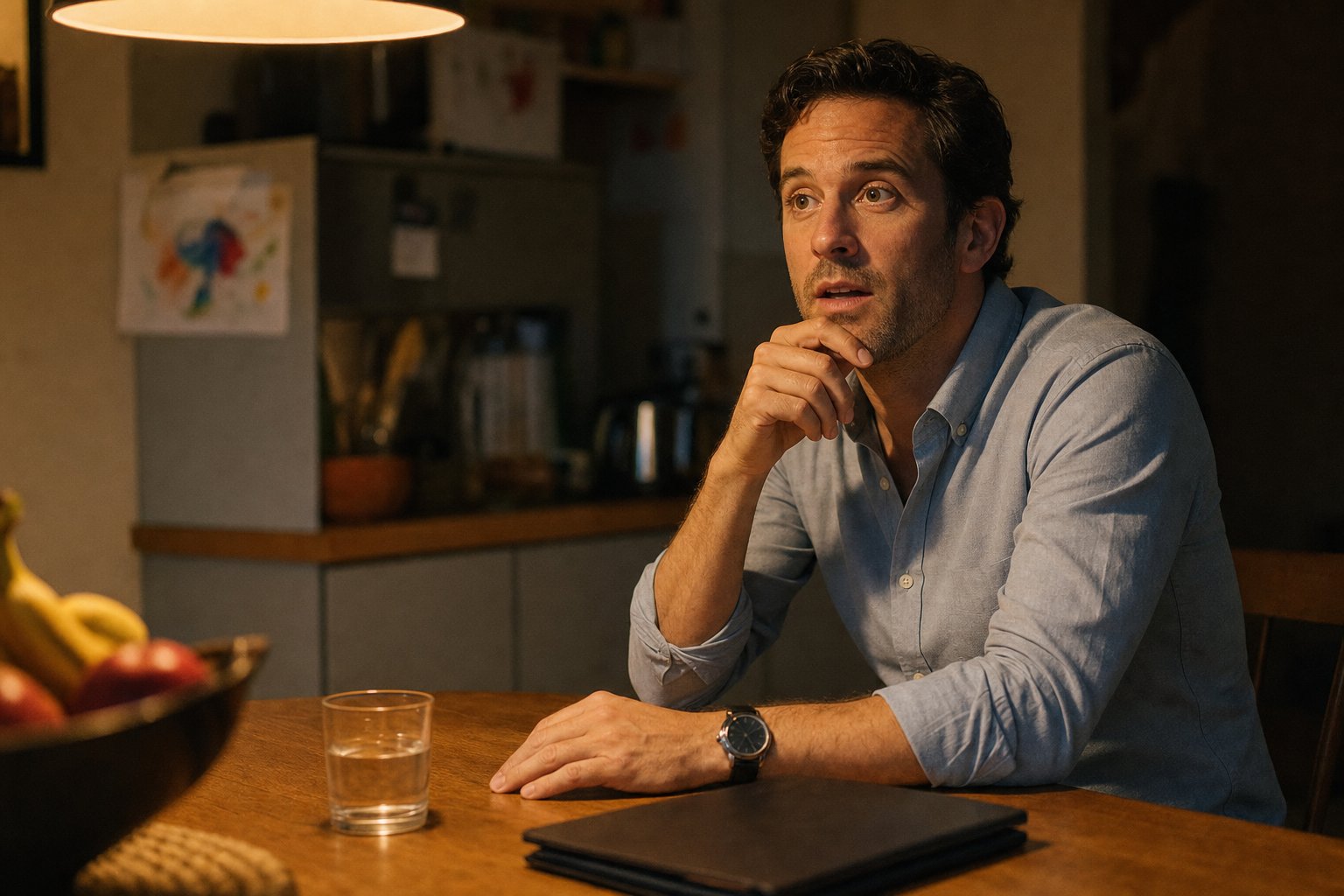
A student does not just read about historical decisions. They step into the shoes of the people who made them, debate the alternatives, and defend a position to a live audience. That student understands history as a record of human agency. And they understand themselves as someone with agency too.
This is the difference that tuition either buys or does not buy, depending on where you enroll.
The Hidden Cost of the Wrong Private School
There is a version of private school tuition that is genuinely worth every dollar. And there is a version that buys you a more expensive iteration of the same compliance-training your child would have received for free.
The distinguishing question is not the school's ranking or its college acceptance rate. It is this: what does a student spend their days actually doing?
At Wonderstorm, the governing question from day one is not 'what does this child need to memorize?' It is 'what kind of person is this child becoming?'
If a student's days are organized around listening to instruction, completing assigned work, and being evaluated on recall, the school is optimizing for compliance. It may do that at a very high level. It may produce excellent test scores. But it is not building the capabilities that determine the shape of a life: how a young adult communicates under pressure, how they lead themselves and others, how they create value from nothing, how they recover from failure and try again.
At Wonderstorm Academy's campus in Laguna Hills, students from across South Orange County. Families from Dana Point, San Clemente, Laguna Niguel, Lake Forest, San Juan Capistrano, Newport Coast, Coto de Caza, Trabuco Canyon, Ladera Ranch, and Portola Hills. Are spending their school hours doing something categorically different. They are building and pitching real businesses at Kid's Market events in front of live community audiences. They are practicing public speaking, persuasion, and social calibration in real interactions with real feedback. They are mentoring younger students and being mentored by older ones in a mixed-age environment that mirrors how the actual world works.
The result is not a child who has a better transcript. It is a child who has a different relationship with their own capability.
Two Doors Into the University of California
For parents whose primary concern is college admissions, the tuition calculus looks different than most people expect.
There are two doors into the University of California system. One is the conventional path: four years competing with over forty thousand high school seniors, each with top grades, exceptional test scores, and some of the most expensive private school educations in the country. That door admits roughly nine percent of applicants. Then you are on the hook for four full years of university expenses.
The Wonderstorm college path offers a second door. Students complete an associate degree and all transfer coursework by age eighteen, then apply as transfer students. A pathway where one in four applicants is admitted. Same university. Same diploma. Roughly two and a half times the odds of acceptance, and approximately seventy thousand to ninety thousand dollars that families never have to spend, because the first two years of university are already done.
The tuition question, framed this way, looks entirely different.
^^A school that costs more per year can cost dramatically less over the full arc of a child's education. If it is the right school.
What Parents in South Orange County Are Choosing
The families who enroll at Wonderstorm are not choosing it because they distrust academics. They are choosing it because they have come to believe that academics alone, even rigorous ones, are not sufficient preparation for the world their children are entering.
Kathryn Badir, a Wonderstorm parent, put it plainly: "My husband and I always knew the traditional public school model wasn't the right fit for our family. We wanted something that focused on more than academics alone."
And Jeff Janke, whose daughter enrolled at Wonderstorm, described what he and his wife actually saw change: "She carries herself with a light and a confidence we hadn't seen before, and it shows most in how she treats our family and friends. She is more present, more kind, more herself."
That is not a description of better test scores. It is a description of a different person. One who has been practicing something other than compliance for the past year.
For families in Laguna Beach, Las Flores, and the broader South Orange County region who have been circling this decision, those outcomes are the actual answer to the tuition question.
Is the Micro-School Model Right for Your Family?
Not every family is the right fit for Wonderstorm, and Wonderstorm does not pretend otherwise. The enrollment process is consultative by design. A conversation before a commitment, because the school is built for families who are choosing intentionally rather than defaulting.
If your goal is a child who graduates with the best possible standardized test scores and the most impressive-looking college application, a conventional college-prep school may serve that specific goal adequately. Wonderstorm is not optimizing for that.
If your goal is a child who walks into any room at nineteen and owns it, who has already built multiple businesses and knows they can build more, who does not wait to be told what to do, and who can hold a conversation, lead a team, recover from failure, and create value from nothing, Wonderstorm is built for exactly that outcome.
The tuition is not a line item. It is a decision about what fifteen thousand hours of your child's childhood are building.
If you are ready to find out whether Wonderstorm is the right fit for your family, the next step is a conversation. Schedule your campus tour or book a call today. And come see what fifteen thousand hours can actually build.
Frequently Asked Questions
Is Wonderstorm Academy accredited, and will my child's credits transfer? Wonderstorm Academy is a private K–12 micro-school in Laguna Hills, California, serving students ages 5–18. Families considering enrollment are encouraged to speak directly with the admissions team about academic records, credit documentation, and transfer pathways during the enrollment conversation, as the specifics depend on each family's situation and goals.
Does a project-based curriculum actually cover the core academic subjects rigorously? Yes. Students at Wonderstorm cover reading, writing, mathematics, science, and history with full rigor. The difference is methodological: those subjects are taught through the lenses of Leadership, Entrepreneurship, and Powerful Communication rather than through passive memorization and standardized test preparation. The academics are the vehicle. Capability is the destination.
How does Wonderstorm prepare students for college admissions? Wonderstorm offers a college path that allows students to complete an associate degree and all transfer coursework by age eighteen, then apply to the University of California as transfer students, a pathway with roughly two and a half times the acceptance rate of freshman admissions and approximately seventy thousand to ninety thousand dollars less in total university cost. Students who are not college-bound graduate with the communication, leadership, and entrepreneurial capability to thrive in trade school, business, or any other path they choose.
What is the student community like at a micro-school this size? Micro-school enrollment is intentionally small, and that is a feature rather than a limitation. Every student is genuinely known by every adult on campus. Mixed-age learning means older students mentor younger ones, a dynamic that mirrors how high-functioning teams and communities actually work. Families consistently describe the Wonderstorm community as one of the most meaningful parts of the experience.
How do I find out if Wonderstorm is the right fit for my child? The enrollment process begins with a conversation, not a form. You can book a call or schedule a campus tour at wonderstormacademy.com/contact-us. The campus is located at 25332 McIntyre St, Laguna Hills, CA 92653, and serves families across South Orange County including Mission Viejo, Aliso Viejo, Rancho Santa Margarita, Lake Forest, Laguna Niguel, Dana Point, San Clemente, San Juan Capistrano, Laguna Beach, Newport Coast, Coto de Caza, Las Flores, Trabuco Canyon, Ladera Ranch, and Portola Hills.