Every Year in the Wrong School Is Lost Forever
Your child is bright. You know it. Their teachers know it. And yet every Sunday night, there is a low-grade dread in the house. Backpack by the door, homework half-done, a kid who was curious about everything at age five now going through the motions at age ten. That gap between who your child is and what school is turning them into is not a phase. It is a cost. And it compounds.
The Math No One Does for You
The average K–12 student spends roughly 15,000 hours in school between kindergarten and graduation. That number is not the problem. The problem is what most of those hours are actually spent doing: sitting, listening, filling in answers, waiting for the bell. Research on academic engagement is unambiguous. Students classified as chronically disengaged show lower course completion rates, weaker social-emotional development, and a measurably lower likelihood of real-world readiness by the time they graduate, even when they remain enrolled and technically passing.
"Every year a child spends in a school that does not fit them increases the risk of academic gaps, lower engagement, and weaker confidence that are difficult to fully recover. Especially in the critical developmental windows between ages 5 and 18."
The early elementary years are not just the beginning of school. They are the window when reading fluency, intrinsic motivation, and the foundational belief that learning is exciting are either built or quietly eroded. A child who finishes third grade without solid reading fluency is significantly more likely to struggle in every subject that depends on it. Which is every subject. Remediation in middle school is far less effective than early support. This is not a scare tactic. It is developmental reality.
For parents in South Orange County. In Laguna Hills, Mission Viejo, Aliso Viejo, Rancho Santa Margarita, Laguna Niguel, Lake Forest, and across the region. The conversation about alternative K-12 education has moved from fringe to urgent. Families are not abandoning the idea of rigorous academics. They are abandoning the delivery model that has been failing their children in plain sight.
What Gets Lost When the Model Is Wrong
Academic gaps are visible. Parents see them in grades, in reading assessments, in the gap between a child's obvious intelligence and their reported performance. What is harder to see. And harder to recover. Is what gets lost in the spaces between grades.
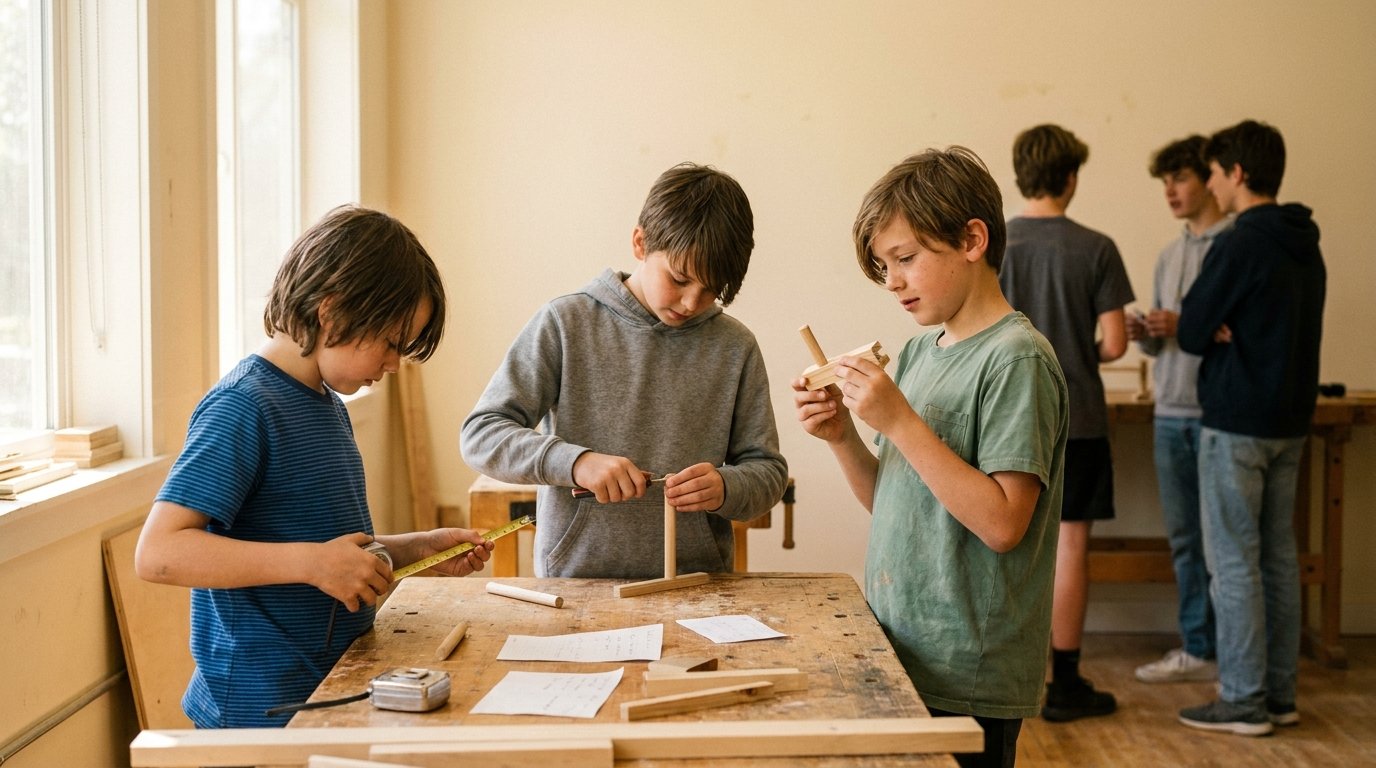
Leadership is not a class. It is a practice. It develops through repeated exposure to real decisions, real consequences, real collaboration with peers who push back. A child who spends six years in a compliance-based classroom. Sit down, follow instructions, wait your turn. Does not arrive at high school ready to lead. They arrive practiced in following. The same is true of communication. Public speaking, persuasion, conflict resolution, the ability to hold a room and articulate an idea with clarity and conviction. These are skills built through daily repetition, not covered in a semester elective.
Entrepreneurial thinking is perhaps the most irreversible loss of all. The instinct to see a problem and immediately wonder how to solve it, to create something from nothing, to take initiative without being asked. This instinct is not taught in traditional schooling. It is, in many cases, actively discouraged. And once a child has been trained for years to wait for the assignment rather than generate the idea, rebuilding that instinct takes time most families do not realize they are spending.
The school that shapes your child's first decade is not just teaching them subjects. It is teaching them who they are.
The Compounding Problem
Here is what makes the wrong school so costly: the damage does not stay still. It accumulates.
"Each disengaged year locks in missed practice in reading, critical thinking, collaboration, and leadership that cannot simply be made up with a test-prep boot camp later."
A child who is disengaged in second grade is less prepared for third. A child who has spent elementary school being told to sit still and be quiet arrives at middle school without the self-direction, initiative, or communication fluency that adolescent learning demands. By high school, the gaps are structural. The student who could have been a confident, self-directed young leader is instead a capable-but-cautious teenager who has learned that the safest move is to do what they are told and wait to be evaluated.
This is not the story of a struggling student. This is often the story of a gifted one. Bright children in the wrong environment do not always fail visibly. They adapt. They learn to perform the minimum required to stay comfortable. They disengage from curiosity and engage with compliance. And their parents, watching good grades come home, assume everything is fine.
The families now actively searching for a private K-12 school in South Orange County, a learning center built around agency rather than compliance, a microschool in Orange County that takes their child's potential seriously. These families have usually already seen this pattern play out. They are not panicking. They are paying attention.
What a Different Model Actually Looks Like
Wonderstorm Academy is a private K–12 micro-school in Laguna Hills, California, serving children ages 5 through 18 across a full K–12 range. It is not a tutoring center, not a hybrid homeschool arrangement, and not an online program. It is a full-time, on-site campus school built around three core lenses that run through every subject, every project, and every interaction: Leadership, Entrepreneurship, and Powerful Communication.
Those three lenses are not electives. They are not add-ons. They are the framework through which reading, writing, math, science, and history are taught. A student learning to write is simultaneously learning to persuade, to structure an argument, to consider an audience. A student working through a math problem is simultaneously learning to break a complex challenge into manageable parts, to persist through difficulty, to communicate their reasoning. Every academic subject becomes a vehicle for building the real-world capability that the next decade of their life will actually require.
The campus environment reflects this. There are no rows of desks. There are no bell schedules designed to move passive bodies from one lecture to the next. There are Socratic discussions, real-world projects, Life Skills Labs, and entrepreneurship experiences. Including the Kid's Market events where students build, price, pitch, and sell actual products to a live community audience. These are not simulations. They are practice for the real thing.
For families in Laguna Beach, Newport Coast, Dana Point, San Clemente, Coto de Caza, Ladera Ranch, Portola Hills, Trabuco Canyon, Las Flores, and San Juan Capistrano who have been quietly researching private school alternatives, the question is not whether this model works. The evidence is in the students themselves. In the confidence of a third grader who can hold a room, in the initiative of a seventh grader who identifies a problem in their community and proposes a solution without being asked, in the high schooler who walks into a college interview already practiced in the art of articulating who they are and what they believe.
The School Choice Conversation Is Already Happening
The broader policy environment is moving in the same direction as the families who have already found schools like Wonderstorm. The California Children's Educational Opportunity Act, now on the November 2026 statewide ballot, proposes Education Savings Accounts that would allow families to direct a significant portion of per-pupil funding toward the private K-12 school, learning center, or alternative K-12 education program of their choosing. School choice ESA California is no longer a fringe conversation. It is a ballot measure.
For families in South Orange County who have been holding back because of cost, this development matters. The investment in a values-aligned private school education. One that builds the skills an AI-driven economy will actually reward. Is becoming more financially accessible. And the families who have already made the move are not waiting for policy to catch up. They acted when they saw the cost of waiting clearly enough to feel it.
Entrepreneurship education for kids is not a luxury curriculum for a niche demographic. It is the single most durable competitive advantage a child can develop in a world where AI will increasingly perform the tasks that traditional schooling optimizes for. The ability to lead, to communicate with conviction, to identify a problem and build a solution. These are the skills that compound in the same direction as the gaps, except in the right direction.
One More Year Is Not a Small Decision
If your child is currently in a school that is not built for who they are, the most natural human response is to wait. To give it one more semester. To see if things improve. To avoid the disruption of a transition.
But a year is not a small unit of time in a child's development. It is a year of leadership practice not taken. A year of communication skills not built. A year of entrepreneurial instinct not cultivated. A year of the specific, irreplaceable window between ages 5 and 18 spent in a model designed for a different child in a different century.
The families who have made the move to Wonderstorm. From Laguna Hills, Mission Viejo, Aliso Viejo, Rancho Santa Margarita, Laguna Niguel, Lake Forest, San Juan Capistrano, Dana Point, San Clemente, Ladera Ranch, Portola Hills, Trabuco Canyon, Coto de Caza, Las Flores, Newport Coast, and Laguna Beach. Did not do it because the decision was easy. They did it because they looked at the math clearly. They counted the years. And they decided that one more semester was one more semester they could not afford to give to the wrong model.
The enrollment process at Wonderstorm is consultative by design. It begins with a conversation, moves to a campus tour, and ends with a decision made by a family who has seen the model in action and knows exactly what they are choosing. It is not a transaction. It is the beginning of a different kind of education.
If you are in South Orange County and you have been quietly asking whether there is a better option for your child, the answer is yes. It is 10 minutes away. And the best time to find out if it is right for your family is before another year passes.
Book a Call to See If Wonderstorm Is Right for Your Family
Research sources7
Live web research informed this article. These are the sources it drew on.
- Private School Enrollment by County & Gradecde.ca.gov
- Private School Data - California Department of Educationcde.ca.gov
- About the Educational Freedom Act Initiative in Californiacaliforniaschoolchoice.org2025-10-02
- Private School Counts & Enrollment by Countycde.ca.gov
- Private School Enrollment — Quality of Life Report Cardqualityoflifereportcard.org2026-01-02
- SB 292: Is California Ready for School Choice?californiapolicycenter.org
- Private School Counts & Enrollment by Yearcde.ca.gov